
时间:2020-09-28 18:31:43来源: 意大利侨网
While about same number of companies got listed in Shenzhen and Hong Kong since 1990, IPO proceeds were 5.5 times higher in Hong KongSum of Shenzhen and Hong Kong markets may be larger than value of each individual strength, adviser Neoh says
Shenzhen turned 40 last month as aspecial economic zone
. Fashioning itself after Silicon Valley, the mainland Chinese city is home to some of the world’s biggest companies such as Huawei Technology, Tencent Holdings and Ping An Insurance.
Its financial sector has more to celebrate as the Shenzhen Stock Exchange approaches 30 in December. Some 670 billion yuan (US$98.9 billion) worth of stocks change hands on average every day this year, making it the busiest bourse in Asia.
Since its inception in December 1990, some 2,339 companies have raised US$93.4 billion from initial public offerings (IPOs), according to Refinitiv.ChiNext, its board of start-ups, has been on a tear
as its capitalisation surged to a third of Shenzhen exchange’s total.
With Hong Kong’s future clouded by political and economic crises, is the mainland city north of the border a worthy rival? Or does its future lie as a partner in the biggest scheme of things?
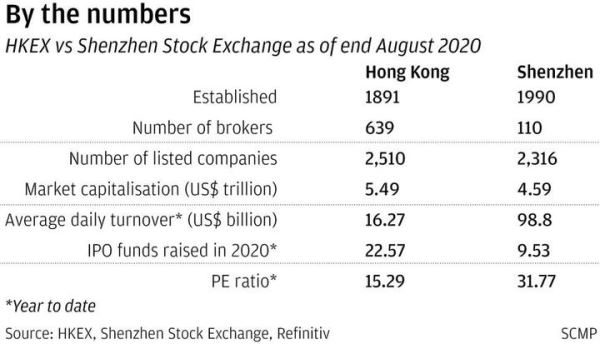
“The two exchanges are competitors if you look at listings as a zero-sum game,” said Anthony Neoh, an adviser to the Shenzhen Stock Exchange on its strategic development. “However, there is much differentiation in the two markets because the Hong Kong market is not encumbered at all by currency restrictions and has a more friendly tax regime for investors.”
Shenzhen’s stock market turnover is about five to six times higher than the value of shares that changed hands in Tokyo, Seoul or Hong Kong, and about 30 per cent higher than in Shanghai. Its biggest company is Wuliangye Yibin, whose namesakebaijiumade from five organic grains is the tonic behind its 890 billion yuan market value.
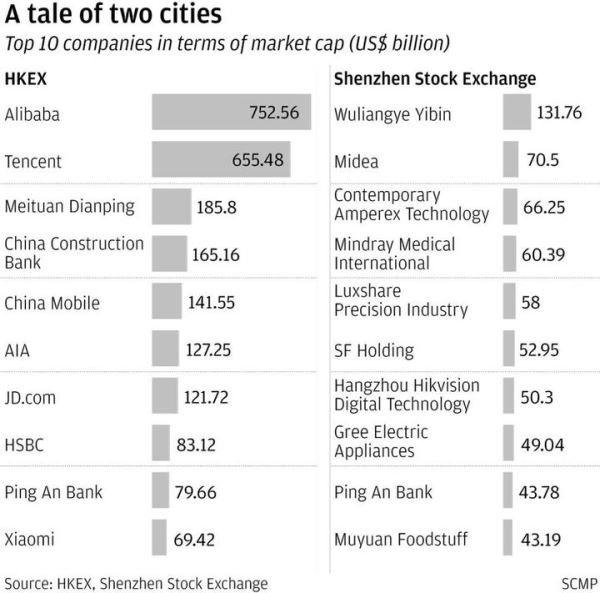
In ChiNext, Shenzhen has a venue for its deep pool of start-ups. More than 860 companies have raised US$70 billion since its formation in 2009. In contrast, Hong Kong’s GEM board for growth and emerging companies only accounted for 0.3 per cent of its US$5.3 trillion capitalisation, despite having a 10-year head start.
“When I went to Shenzhen in 1994 to help companies there to raise funds from international markets, the only choice was Hong Kong,” Clement Chan, managing director of accounting firm BDO. On the flip side, foreign investors did not know much yet about Shenzhen.”
Today, Shenzhen is the richest among nine cities in southern Guangdong province, which together with Hong Kong and Macau, make up a US$1.65 trillion economic cluster under China’s Greater Bay Area initiative.
The Greater Bay Area Plan
The Pearl River Delta in China's south has grown from an agricultural area in 1980 to Asia's largest and most populous urban area.
The Greater Bay Area Plan
The Pearl River Delta in China's south has grown from an agricultural area in 1980 to Asia's largest and most populous urban area.
The Greater Bay Area Plan
The Pearl River Delta in China's south has grown from an agricultural area in 1980 to Asia's largest and most populous urban area.
Despite its credentials, Shenzhen still lacks scale, BDO’s Chan said. Its champion Wuliangye Yibin trails in size to those traded in Hong Kong, such as Alibaba Group Holding, Tencent, and Meituan Dianping. They have raised US$516 billion in IPO proceeds since 1990, about 5.5 times more than Shenzhen-listed firms, according to Refinitiv.
The impending IPO of Ant Group, China’s largest digital payments provider whose impending IPO is expected to be the world’s largest ever, is listing in Shanghai and Hong Kong. The gap between Shenzhen and Hong Kong will only widen when that happens.
“Hong Kong stock market plays host to the larger companies which have grown beyond mere start-ups,” said Neoh, who was a former chief adviser of China Securities Regulatory Commission from 1998 to 2004. “Shenzhen has been willing to take on smaller brownfield companies.”
Shenzhen and Hong Kong have about 4,700 listed companies with a combined market value of about US$10 trillion. The sum of the parts may be larger than the individual strength of each market, adviser Neoh said.
“HKEX and Shenzhen Stock Exchange are still leading markets for Chinese businesses,” said Stephen Chan, a partner at law firm Dechert. “Therefore, we would expect both to continue to benefit from the growth of China’s economy in the long run.”
As China’s economic recovery gains traction, the agenda looks promising. It syncs with some of the aims in Hong Kong Exchanges and Clearing (HKEX)’s strategic plan, to support portfolio diversification by mainland investors.
Shenzhen last month outlined a 50-point blueprint to expand and upgrade its financial services sector to grease trade and capital flows with investors based in Hong Kong and elsewhere, according to a report published by Shanghai Securities News.The plan includes 85 measures to strengthen market cooperation.
“This cooperation is supported by the currency restrictions in place,” Neoh said. “I cannot see the People‘s Bank of China opening up the capital account in full for at least the next 10 to 15 years and although there will be some liberalisation.”
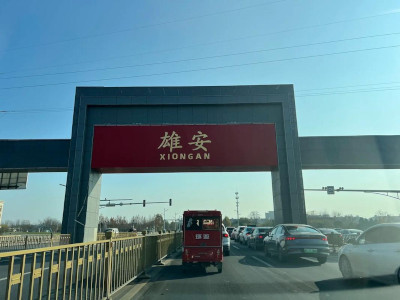
2026全球治理论坛(雄安)发布《论坛愿景文件》
2026-10-27
多彩中国亮相五大洲国际文化节,中华文化与旅游魅力走近希腊公众【组图视频】
2026-10-26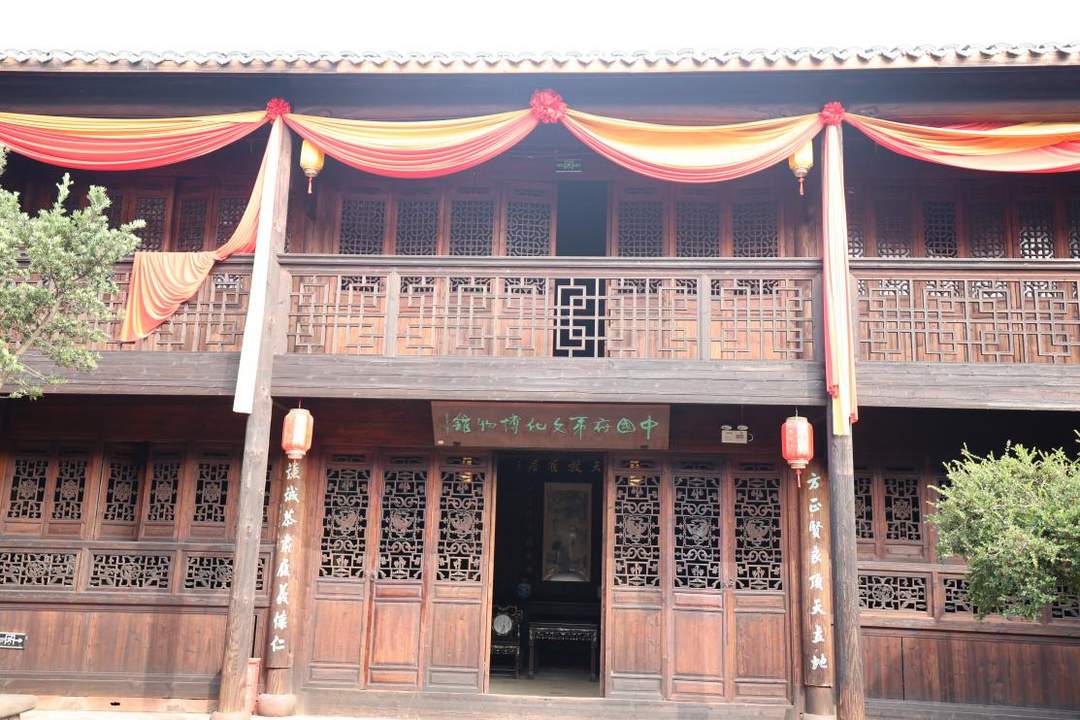
对标世界乡村发展范式 新建实践诠释中国式振兴新路径
2026-10-23
城乡共生融新业 开放兴农启新篇 新建都市现代农业惊艳国际视野
2026-10-23
立足县域创新实践 新建区贡献全球乡村振兴中国方案
2026-10-23
融联中游城市群 聚力产业新跃升 新建区赋能区域高质量协同发展
2026-10-23
海外华文媒体对话耿福能 共话中医药出海
2026-10-23
2026年世界互联网大会乌镇峰会启幕在即——水乡之约 新意扑面
2026-10-20